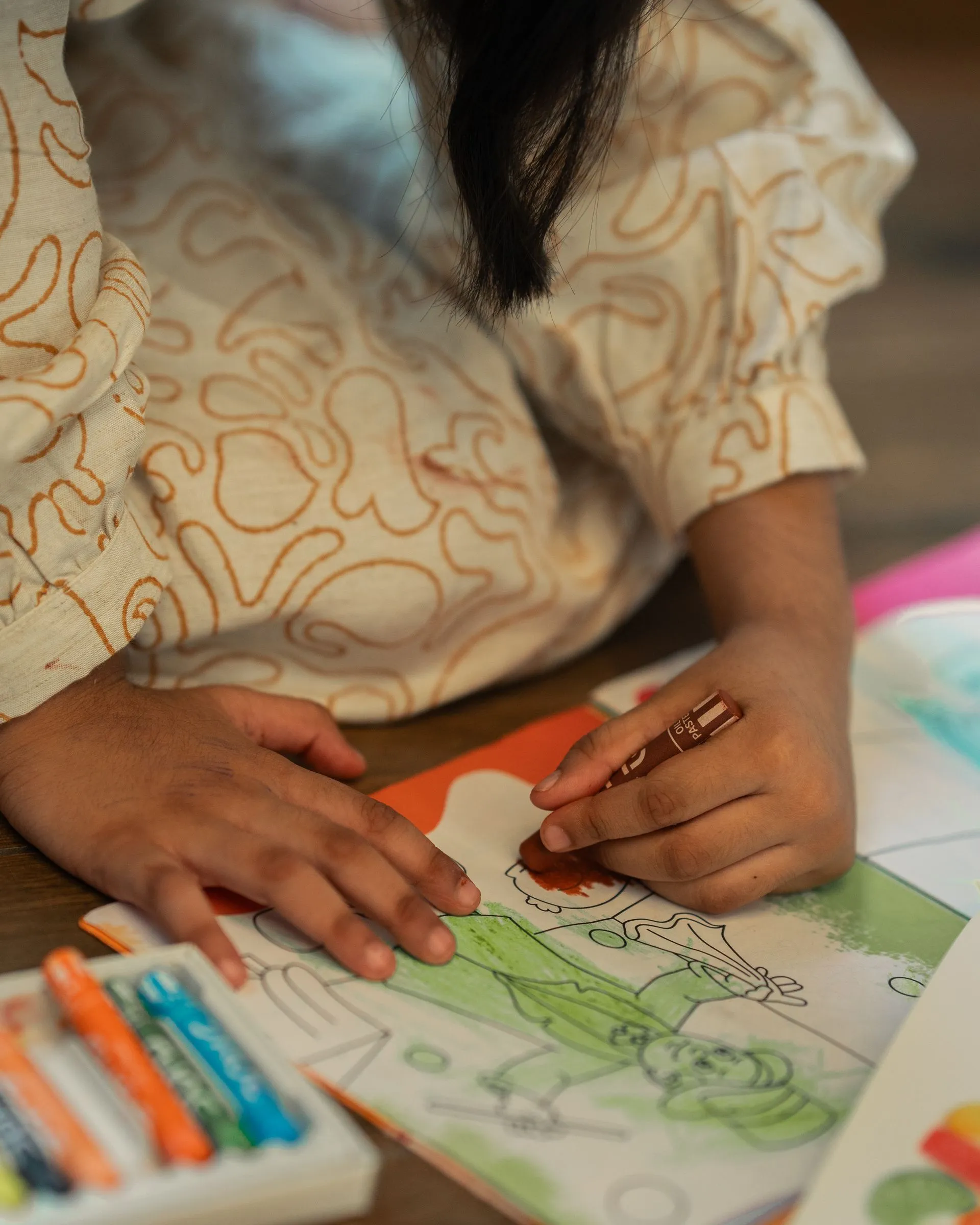
Child drawing with colorful crayons in child and teen therapy

Child & Teen Therapy

Suffering in childhood and adolescence often manifests in particular ways: inhibitions, behavioural changes, fears or difficulties in relating to others. We offer a space that holds the uniqueness of their times and ways of expression, also accompanying responsible adults through these challenging moments.

Times of constitutionPlay and drawing as the child’s languagePosition of responsible adults

How does it work?

In childhood and adolescence, suffering is rarely translated into a clear demand expressed in words. Discomfort usually appears in the body, in learning problems, in isolation, or through behaviours that challenge the adults. With children, play, drawing and storytelling become the privileged ways to work through and process what causes anguish. In adolescence, we offer a space of shelter from the family and social gaze, holding the upheavals typical of that stage. In both cases, clinical work is not done in isolation: it is sustained by constant articulation with parents or responsible adults, inviting them to question the place that child or young person occupies in the family dynamic.

What does it offer?

A clinical space that respects the time and the way in which each child or adolescent can express their suffering.
Playful tools (games, drawing, stories) adapted to the logic of each age.
Guidance and support interviews with parents to think together about the coordinates of the child’s discomfort.
Articulation (when the situation requires it) with the school or other professionals involved.

Who is it for?

servicioEspecialidades.terapiaInfantoJuvenil.suitableFor.content

Children with difficulties in the school bond, sleep disorders, intense fears, enuresis, or abrupt behavioural changes.
Adolescents going through marked identity crises, isolation, severe inhibitions, overwhelming anguish or acting-out (risk behaviours).
Families who notice a break or suffering in the bond with their children and are looking for a space to ask what is happening.

Frequently asked questions

Do parents come into the sessions?

The child’s or adolescent’s space is individual to protect their privacy and their word. However, periodic interviews are scheduled with the parents alone to work on the process, since their involvement is essential.

What if my child does not want to talk or is very young?

With younger children we do not aim for formal conversation. The work unfolds through play, toys and drawing, which are their ways of staging and processing what is happening to them.

Will my child be given a diagnosis?

We avoid labels that fix or stigmatise a child under a name ("he is hyperactive", "he has such a disorder"). We seek to read what function that behaviour serves in the child’s and the family’s life in order to open other ways of expression.

Start therapy with your child

A space that holds their uniqueness and supports the family.